
16 July 2026
The global FSHD community came together in Chicago for the FSHD International Research Congress (IRC) 2026, FSHD Connect, and the Project Mercury Global Task Force meeting – a week filled with scientific progress, collaboration, and renewed commitment to improving the lives of people living with FSHD.
Hosted by the FSHD Society, IRC 2026, and FSHD Connect showcased encouraging developments across the FSHD field, including new research findings, updates from ongoing clinical trials, advances in biomarker development, and growing collaboration between patients, clinicians, researchers, and industry. Highlights included sessions on pain in FSHD, non-pharmacological management, standards of care, an industry panel on drug development, and the importance of building a treatment-ready community.
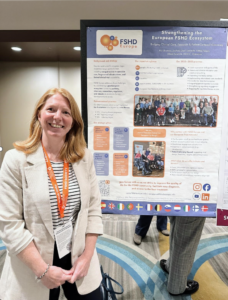
We, FSHD Europe and the FSHD European Trial Network (ETN), were proudly represented by Ria de Haas, Nicol Voermans, Héctor Ricardo Gerpe, Kees van der Graaf, Hicham Alaoui, Enrico Bugiardini, Giorgio Tasca, and Julie Dumonceaux. As researchers, representatives from our member patient organisations and our Scientific Committee, they contributed through leadership, presentations, posters, and panel discussions.
This year’s presentations reflected the strong momentum across the FSHD landscape. Encouraging progress is being made in research, drug development, and international collaboration. At the same time, it is important to balance optimism with realistic expectations. While advances continue at an impressive pace, significant work remains to ensure that safe and effective treatments become available and accessible to everyone who needs them.
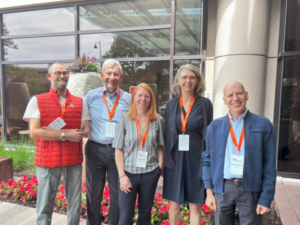
Project Mercury Global Task Force meeting showcases international collaborations
Following the conference, Project Mercury’s Global Task Force met in Chicago under the leadership of Emma Weatherley, Managing Director of FSHD Global Research in Australia. Project Mercury is a unique global collaboration led by FSHD patient advocacy organisations in partnership with researchers, clinicians, biopharma companies, and other experts. The initiative focuses on overcoming barriers that slow the development and delivery of treatments for people living with FSHD worldwide.
The meeting highlighted the power of international collaboration, with participants sharing progress from across the globe. Examples included wider access to genetic testing in Brazil, growth of patient registry participation in Spain, the launch of a new FSHD Canada group in Ottawa, improved implementation of standards of care in Italy, and FSHD UK has a newly refreshed website.
Participants also engaged in an open discussion with health technology assessment (HTA) experts and industry representatives on the challenges that still lie ahead, including remaining gaps in care, research readiness, and access to future therapies.
To mark this progress, Project Mercury recently published its 2023–2025 Interim Progress Report, showcasing two years of coordinated, patient-led efforts to strengthen global FSHD research readiness and prepare healthcare systems for future treatments.
The week in Chicago reinforced a clear message: progress in FSHD is accelerating, and collaboration remains one of the field’s greatest strengths. We left with renewed energy and a shared commitment to improving the lives of people living with FSHD worldwide. Joining forces with our member associations makes us stronger and more impactful in advancing our cause.
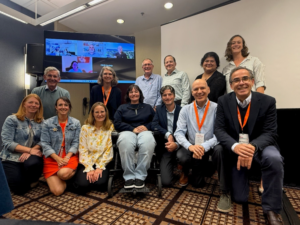
Watch the video by FSHD Finland
View this post on Instagram
Learn more:
International Research Congress – FSHD Society
FSHD Connect Conference – FSHD Society
Global Task Force – Project Mercury