
Fundamental research
To make the right clinical decisions or develop effective diagnostic test and treatment, it is important to understand the underlying mechanisms of a disease. Therefore, (fundamental) research is essential. FSHD was first distinguished as a disease in the 1870s and 1880s. In the following years the DUX4 gene was discovered, and the genetic mechanism was elucidated in 2010. To see an overview of the findings in FSHD click on the button below.
Rethinking FSHD:
new FSHD Europe paper questions three long-standing assumptions
In a new open-access paper led by FSHD Europe, patient advocates, clinicians, and researchers come together to re-examine three assumptions that are often repeated about FSHD.
A peer-reviewed article challenging three long-standing assumptions
Published in Neuromuscular Disorders, the paper was led by our CEO, Ria de Haas, and co-authored by our Medical Advisor and European Trial Network Chair, Nicol Voermans, together with leaders from national and international FSHD organisations.
Looking beyond current assumptions
Every disease develops its own set of commonly repeated messages. Over time, these can become accepted as fact and people stop questioning them. These assumptions can influence how patients, clinicians, researchers, regulators, industry partners, and policymakers understand a disease and the decisions they make about research, care, treatment development, and access.
We believe that lived experience should play a greater role in shaping how FSHD is understood, researched, and managed. Specifically, we challenge these commonly repeated statements:
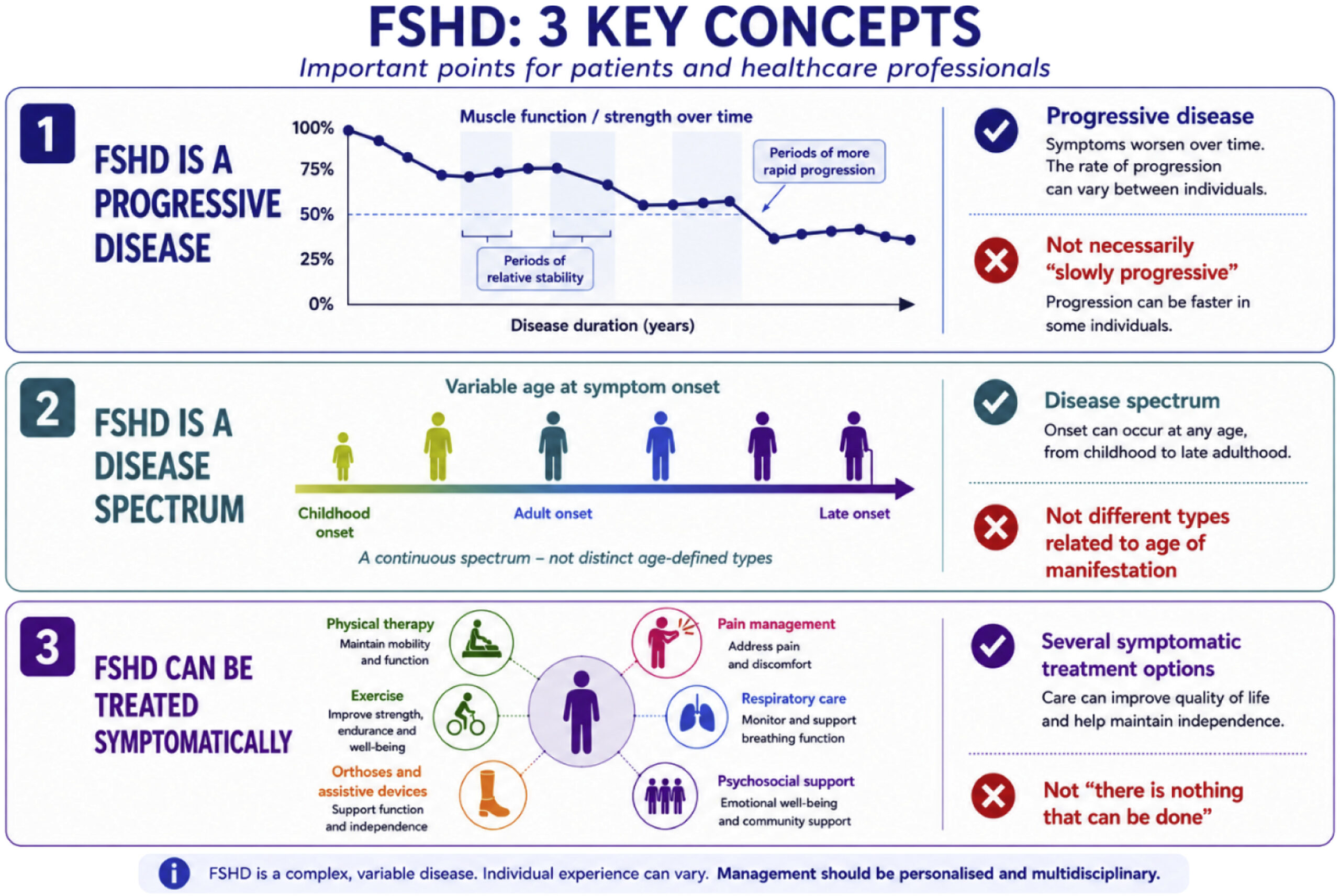
- “FSHD is a slowly progressive disease”
- “FSHD can be classified as: infantile [childhood-onset] FSHD and classic FSHD”
- “There are no treatments available for FSHD”
As alternatives, we suggest:
- FSHD is a progressive disease with a highly variable course. While symptoms worsen over time, the rate of this can vary among individuals.
- FSHD is a disease spectrum. Onset can occur at any age, from childhood to late adulthood.
- Several symptomatic, multidisciplinary care options exist, providing meaningful treatment and support. While disease-modifying investigational therapies are being researched and developed, it is important for people affected by FSHD to seek personalised, multidisciplinary care to optimise their quality of life.
Why this article matters
Our article is not announcing a new clinical trial result, a regulatory decision, or a new investigational therapy. Instead, it focuses on how FSHD is described and understood.
That may sound less urgent or important than a clinical trial announcement, but language matters. The language we use influences expectations and shapes research priorities. It also affects how FSHD is understood by patients, clinicians, researchers, regulators, and decision-makers, ultimately influencing how people think, make decisions, and take action.
A collaborative effort across the FSHD community
This publication represents a true collaboration among patients, carers, researchers, clinicians, and patient organisations. Alongside Ria de Haas and Nicol Voermans, the authors include leaders from FSHD Europe member organisations in the Netherlands, Spain, Italy, and the United Kingdom, as well as representatives from the FSHD Global Research Foundation. Several of the authors are living with FSHD themselves or are carers.
At FSHD Europe, we believe that the experience and expertise of the FSHD community, their insights and perspectives, should sit alongside scientific and clinical expertise. This particularly pertinent when important decisions about FSHD research, healthcare, drug development, and future access to therapies are being made.
We are especially pleased that the article has been published as an open-access paper. This means that anyone affected by FSHD can read it, share it, and discuss it with their healthcare professionals. We look forward to evolving exchanges on how FSHD is understood.
Learn more
Read our open-access article here https://doi.org/10.1016/j.nmd.2026.107421
Learn more about research on FSHD here https://fshd-europe.info/research/
What is a clinical trial?
Clinical trials are a type of research that studies new tests (outcome measures) and treatments and evaluates their effects on human health outcomes. People volunteer to take part in clinical trials to test medical interventions (such as drugs, biological products, surgical procedures, devices, behavioral treatments, and preventive care).
Clinical trials are carefully designed, reviewed, and completed, and need to be approved before they can start. In clinical research, a specific group of patients is selected to participate based on set inclusion and exclusion criteria that define who can be included or excluded from the study. The inclusion criteria identify the study population in a consistent, reliable, uniform, and objective manner. The exclusion criteria include factors or characteristics that make patients ineligible for the study. These factors may be confounders for the outcome parameter.
There are 4 phases of clinical trials:
- Phase I studies usually test new drugs for the first time in a small group of people to evaluate a safe dosage range and identify side effects.
- Phase II studies test treatments that have been found to be safe in phase I but now need a larger group of human subjects to monitor for any adverse effects.
- Phase III studies are conducted on larger populations and in different regions and countries and are often the step right before a new treatment is approved.
- Phase IV studies take place after country approval and there is a need for further testing in a wide population over a longer timeframe.
Participate in research
Although many breakthroughs and insights were gained over the past years of research, there is still no treatment available for FSHD. Therefore, patient participation is indispensable. When you participate in research, you:
- help researchers understand how FSHD progresses;
- help establish the tools needed to see if new drugs are effective;
- increase understanding of the costs of living with FSHD;
- advance knowledge about the diversity in the FSHD community;
- improve care at the doctor’s office.
If you want to participate in research, it is important to register in a patient registry.
Learn more about research?
If you want to learn more about research in general or other interesting topics, look at the EURORDIS Open Academy for free online courses:
Learn with the EURORDIS Open Academy – EURORDIS Open Academy
Drug development
Not only newly developed compounds or drugs can be tested, but there are also the so-called repurposed drugs. These are compounds that were developed for other diseases and tested in the clinic. Some of them may have been approved for treatment of a specific disease, while others may have been shown to be safe but failed to be effective in these other indications and thus were abandoned. When a repurposed drug is found to work in the ‘engage the target’ stage, it can often rapidly advance to the clinic, saving years and millions of dollars in preclinical testing.
Currently many pharmaceutical companies and academic labs are engaged in FSHD drug development.
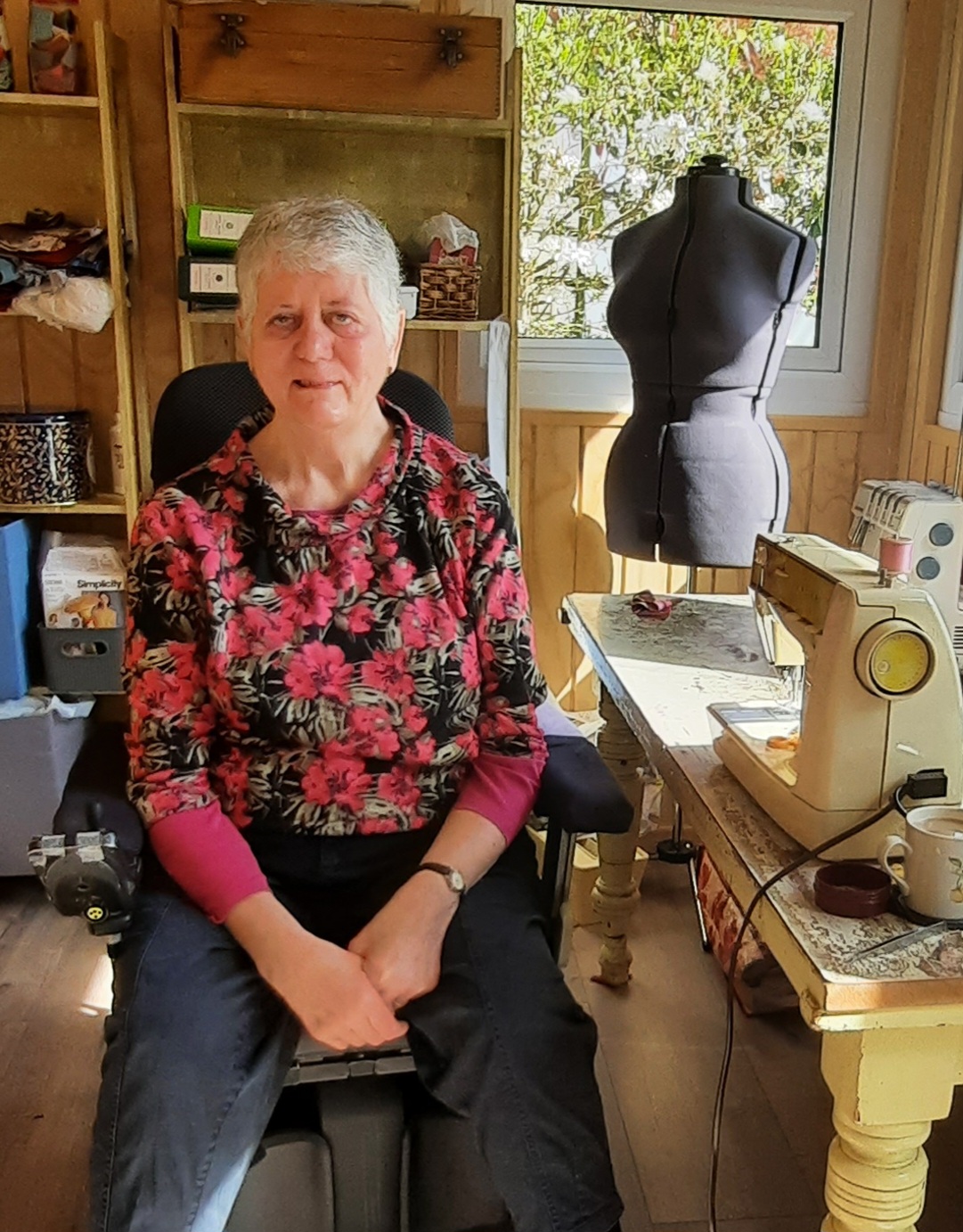
“I want to dress like everyone else – to feel confident, professional, and seen for who I am.”
Sheila Hawkins
President FSHD Europe
What is a clinical trial?
Clinical trials are a type of research that studies new tests (outcome measures) and treatments and evaluates their effects on human health outcomes. People volunteer to take part in clinical trials to test medical interventions (such as drugs, biological products, surgical procedures, devices, behavioral treatments, and preventive care).
Clinical trials are carefully designed, reviewed, and completed, and need to be approved before they can start. In clinical research, a specific group of patients is selected to participate based on set inclusion and exclusion criteria that define who can be included or excluded from the study. The inclusion criteria identify the study population in a consistent, reliable, uniform, and objective manner. The exclusion criteria include factors or characteristics that make patients ineligible for the study. These factors may be confounders for the outcome parameter.
There are 4 phases of clinical trials:
- Phase I studies usually test new drugs for the first time in a small group of people to evaluate a safe dosage range and identify side effects.
- Phase II studies test treatments that have been found to be safe in phase I but now need a larger group of human subjects to monitor for any adverse effects.
- Phase III studies are conducted on larger populations and in different regions and countries and are often the step right before a new treatment is approved.
- Phase IV studies take place after country approval and there is a need for further testing in a wide population over a longer timeframe.
Participate in research
Although many breakthroughs and insights were gained over the past years of research, there is still no treatment available for FSHD. Therefore, patient participation is indispensable. When you participate in research, you:
- help researchers understand how FSHD progresses;
- help establish the tools needed to see if new drugs are effective;
- increase understanding of the costs of living with FSHD;
- advance knowledge about the diversity in the FSHD community;
- improve care at the doctor’s office.
If you want to participate in research, it is important to register in a patient registry.
Learn more about research?
If you want to learn more about research in general or other interesting topics, look at the EURORDIS Open Academy for free online courses:
Learn with the EURORDIS Open Academy – EURORDIS Open Academy
Patient registries
Patient registries are databases containing information about individuals who are affected by a specific disease, such as FSHD. In rare diseases, they play an important role in the development of new therapies.
Registries can:
- Identify participants in clinical trials
- Help develop care standards, to help improve the care people receive
- Support specific research questions for doctors and scientists
- Contribute to the natural history of FSHD
- Provide a link to the research community enabling people to receive information directly relevant to their condition.
We encourage all FSHD patients to register yourself in a national patient registry. Not all countries may have a specific FSHD patient registry, some have neuromuscular registries. Please contact the patient organization in your country or ask your healthcare provider to learn more about this.