
Why trial sites generally invite people living in their country
While recruitment for the FORTITUDE trial is ongoing, FSHD ETN clinicians receive many questions from people living in other countries in Europe and beyond who are interested in taking part.
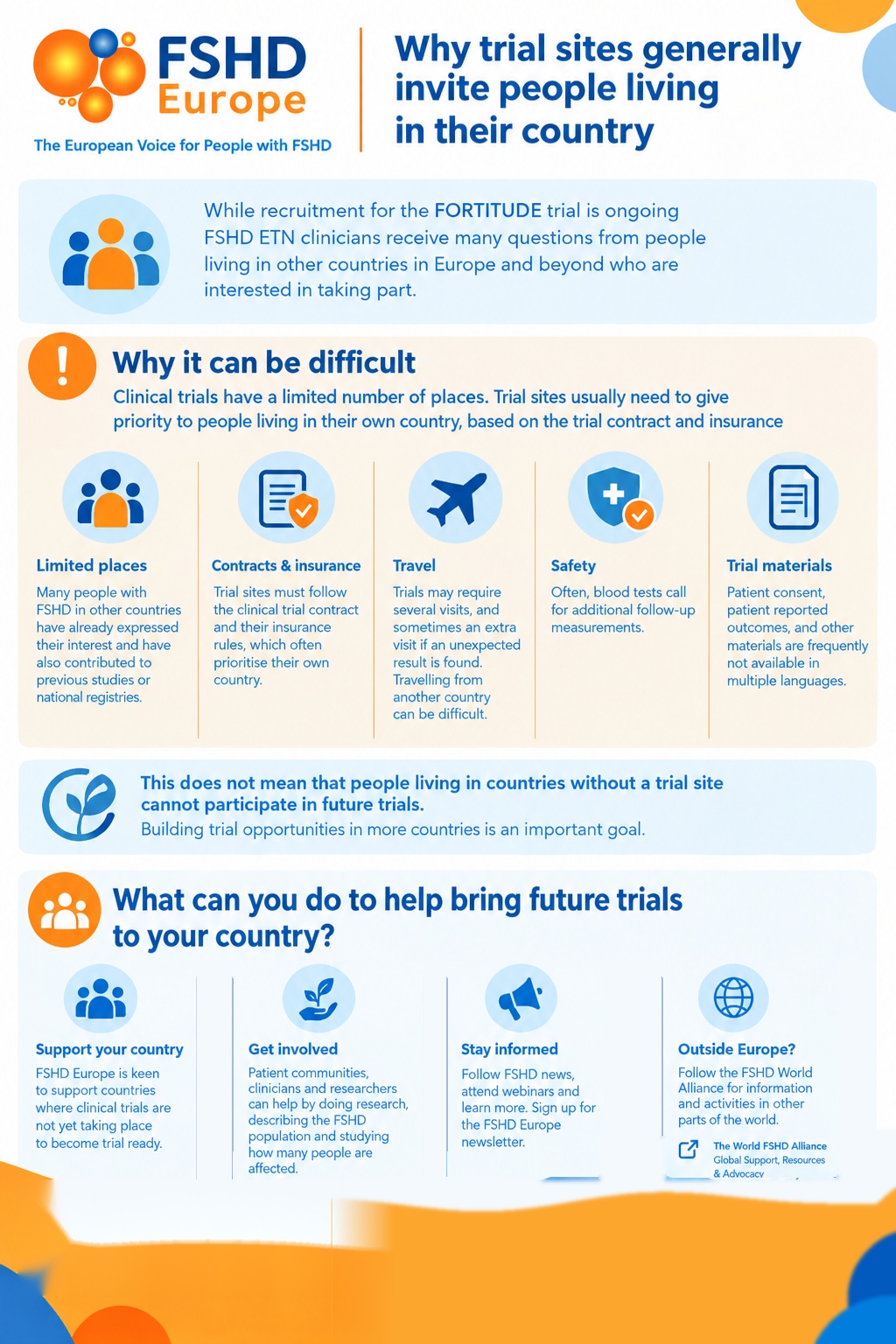
Clinical trials have a limited number of places for participants. Trial sites usually need to give priority to people living in their own country, based on the clinical trial contract and their insurance issues . In many countries, people with FSHD have already expressed their interest in participating. Some have also contributed to previous clinical studies or to national FSHD registries and have been waiting for an opportunity to take part in a trial.
There are also practical reasons why taking part in a trial in another country can be difficult. Clinical trials may require several visits, and sometimes an additional visit is needed if an unexpected result is found during an examination. Travelling from another country can make this difficult. Even when participants are willing to arrange and pay for their own travel, there can be problems with travel, language, or communication. Research nurses and other trial staff are trained to work with participants in their own language, and not all trial teams can provide support in other languages. Essential trial materials, such as patient consent, patient reported outcomes, are frequently not available in multiple languages either.
This does not mean that people living in countries without a trial site cannot participate in future trials. Building trial opportunities in more countries is an important goal.
What can you do to help bring future trials to your country?
FSHD Europe is keen to support countries where clinical trials are not yet taking place to become trial ready.
A strong and active FSHD patient community is an important part of this. This can be part of a national neuromuscular patient organization or a separate FSHD organization. Clinicians can also help their country become trial ready by doing clinical research on FSHD. For example, they can describe the characteristics of people with FSHD in their country or study how many people are affected by FSHD.
You can also contribute. Stay informed by following FSHD news, attending webinars and learning more about FSHD. Please sign up for the FSHD Europe newsletter to receive updates and information about opportunities for patients and families (News – FSHD Europe). And mark your agenda for the 2027 FSHD Europe Connect meeting in Madrid in June 2027 (FSHD Connect Europe – FSHD Europe).
If you live outside Europe, you can follow the FSHD World Alliance for information and activities in other parts of the world (The World FSHD Alliance | Global Support, Resources & Advocacy).
To learn more about current trials and studies see: Current Trials and Studies | FSHD Society or Search for: Other terms: facioscapulohumeral, Recruiting studies | Card Results | ClinicalTrials.gov